Archive


Category: Glossary of Terms

  • Log Frames

    LogFrame is a matrix planning tool that provides an overview of project objectives, activities and expected results. It creates a structure that allows project components and activities to be specified and linked together. Measures to monitor the expected results of the project have also been defined. The Logical Framework approach was developed in the late […]


  • Program Accountability Framework

    The Program Reporting Framework (PAF) summarizes the existing obligations as follows:(a) International standards approved by the organization (some of which are shown in the circles below)b) Policies, standards and organizational approaches to our different types of programs: Core human standards of quality and responsibility.United Nations Global Standards for Accountability of CSOs. Convention on the Rights […]

  • anonymous woman retouching photos using netbook
    Project

    A project is a series of interrelated activities planned over a period of time to improve the condition of a particular group of people.

  • Program

    A program is a portfolio of several projects that are managed and coordinated as a unit with the aim of delivering results and benefits for the organization. The program has identified various strategies to achieve the results. The program may include a number of related projects and activities. It can be a combination of development, […]

  • Monitoring Evaluation Accountability and Learning

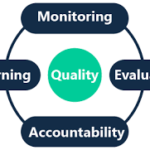
    Monitoring, Evaluation, Accountability and Learning (Monitoring Evaluation Accountability and Learning) are part of the day-to-day management of programs and are essential to the success of all programs. The technical quality of Monitoring Evaluation Accountability and Learning is very important in the project portfolio. Without an effective feeding system, we would not be able to track […]

  • Learning

    Learning can be defined as the “social process by which we develop knowledge, skills, insights, beliefs, values, attitudes, habits, feelings, wisdom, shared understanding and self-awareness.” (Britton 2005, p55).

  • Evaluation

    Evaluation is the systematic evaluation of the performance of an activity, project, program, strategy, policy, subject, subject, area, field of activity or institution. Evaluation focuses on expected and achieved performance, examining a series of effects (inputs, activities, outputs, outputs and effects), processes, relevant factors, and causality to understand the performance or lack of performance. The […]

  • Monitoring

    Monitoring is the systematic process of collecting, analyzing and using information to track the progress of a program towards its objectives and guide management decisions. Monitoring generally focuses on processes, eg. Like B. When and where activities are carried out, who does them and how many people or units they reach. Monitoring will take place […]

  • Baseline

    Starting Point for Project Management A clearly defined starting point for your project plan. This is a solid benchmark that you can use to measure and compare the progress of your project. This is a great way to measure the performance of your project over time.

  • Target group

    Target groups are those individuals or groups that a project or program is targeting with its intervention. A target group consists of specific individuals, specific organizations, or specific institutions, etc. for whom project services are intended. Target groups can differ from beneficiaries of a project for whom the benefits of the intervention are intended. (E.g. […]