Tasks, Assignments and Descriptions will vary and be different from one organization , program or project to another. Sample Tasks and Assignments Job title: Monitoring Evaluation Accountability and Learning Coordinator Department: Program Quality, Evidence and Impact. Job Purpose: To provide leadership and coordination in Design, Monitoring, and Evaluation of The Organization The Region, projects, and […] →Read more
What will you may do as a Monitoring Evaluation Accountability and Learning specialist?
by
Differences may apply according to each institution regulations, type of project or program and term of responsibilities. In coordination with the Director and program managers, ensure that the Monitoring Evaluation Accountability and Learning Plan is implemented as much as is practically possible. Monitor program implementation, measure impact, and calibrate program strategy and implementation accordingly. Design, […] →Read more
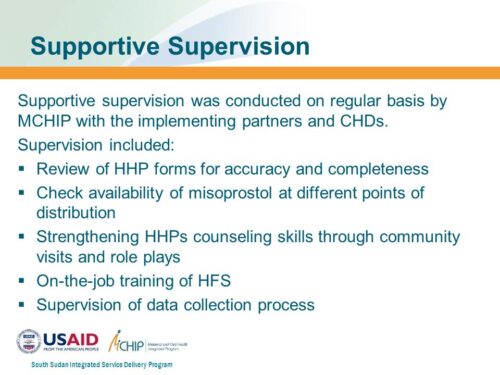
Supportive Supervision
by
Supportive supervision is a process that helps employees continually improve their job performance. This is done in a respectful and non-authoritarian way, emphasizing the use of follow-up visits as an opportunity to improve the knowledge and skills of healthcare professionals. Supportive supervision is a facilitative approach to supervision that promotes guidance, collaborative problem solving, and […] →Read more
The Need for Monitoring and Evaluation
by
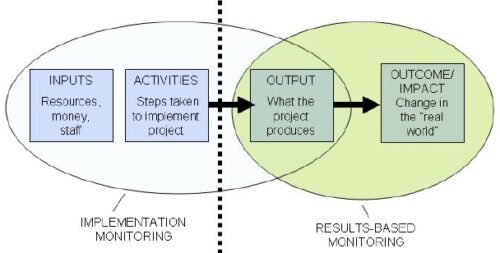
Non-governmental organizations (NGOs) have used monitoring and evaluation, or mergers and acquisitions, to evaluate programs for decades. For the European Union, United Nations, World Bank and other development banks, M&E is involved in their organizational processes. Many have also published M&E toolkit to promote understanding and uptake. Associations in countries such as the Swiss Evaluation […] →Read more
Program Accountability
by
Program accountability (sometimes called accountability to or less than the affected population) describes how we try to be accountable to children and the communities we serve. They are often in a vulnerable position where the most powerful decision makers, including organizations, neglect their needs, rights and ideas. Program governance involves how organizations use power responsibly […] →Read more
Civil Society
by
Civil society is a group of civil society organizations that civilians voluntarily form to promote common goals or interests. These include independent public research organizations, interest groups, human rights and democracy organizations, humanitarian organizations, private foundations and foundations, charities, corporations, associations and non-profit organizations. It does not include political parties. →Read more
Target Population
by
Target groups are those individuals or groups that a project or program is targeting with its intervention. A target group consists of specific individuals, specific organizations, or specific institutions, etc. for whom project services are intended. Target groups can differ from beneficiaries of a project for whom the benefits of the intervention are intended. (E.g. […] →Read more
Hard Outcomes
by
They are defined as measurable and often easy to measure (e.g. organizations raise more money through training than through better fundraising). Hard results are no better than soft results, just different. →Read more
Transformational Development Indicators
by
Transformational Development Indicators (TDI) are a set of program-level indicators designed to measure the quality of life of communities. TDI aims to demonstrate the quality of life of communities, families and children by facilitating community, sustainable and transformative development (TD / ADP) programs →Read more
When should indicators be developed?
by
Indicators should be developed at the beginning of program and can help researchers and program managers to track program progress throughout the program and measure program outcomes at the end. →Read more